Ford’s entry into the compact SUV market takes it into one of the most crowded sectors in the industry. As such, it needs to tick a lot of boxes to succeed.
Size-wise, the Explorer comes in below the Mustang Mach-E, an all-Ford product, but shares its drive architecture with Volkswagen.
However, it is not a rebadged version, with Ford engineering significantly integrated into the contributing electrics.
Significantly, the bodywork is unique to the model as is the interior to give Ford dominance to the new contender.
As is now the custom with Ford, they dip into former popular names and assign the ‘Explorer’ badge to this all new all-electric.
Styling is successful in that it can be identified from a distance unlike the outline similarity of some of its competitors.
It lacks the aggressive angular detailing of many of its rivals with smooth front end and in-glass detailing on the useful rear side window.

The roof retains a level flow and an overhanging rear spoiler adds a sporting suggestion.
A first approach to the vehicle hints at practicality with traditional pull door handles, neatly illuminated at night.
The interior also suggest practicality with its clean uncluttered appointments.
Model choice is also simple with a single power output for the two drive options – a 77kWh battery for the review model ‘Extended Range RWD’ and a marginally larger 79kWh battery for the ‘Extended Range AWD’.
In the case of the rear wheel drive review model, this is rated at 286PS, compared to 340PS for the all-wheel drive version.

This gives a 0-62mph time of 6.4 seconds and a top speed of 112mph.
On road, and direction control and parking brake are on the right hand steering stalk. The wipers – front and rear – are now loaded onto the lights/flasher stalk.
Driving the vehicle over a couple of weeks in our relatively poor weather conditions widened the appeal of the SUV.
A smooth and easily controllable throttle response with balanced braking between regenerative and manual application provided a confident drive.
However, with 545 Nm torque immediately delivered to the rear wheels, substantial care must be taken in challenging conditions.
I preferred it to my earlier drive in the all-electric Capri and it offers a more manageable sized vehicle than the Mustang Mach-E for some of our town and road layouts.
Driver information is well displayed in the small 5-inch digital cluster, while the 14.6-inch infotainment screen looks neatly integrated into a minimal dash design, topped by a sound bar.
However, this screen also contains the air con controls and is lower than preferred for accessing on the move.
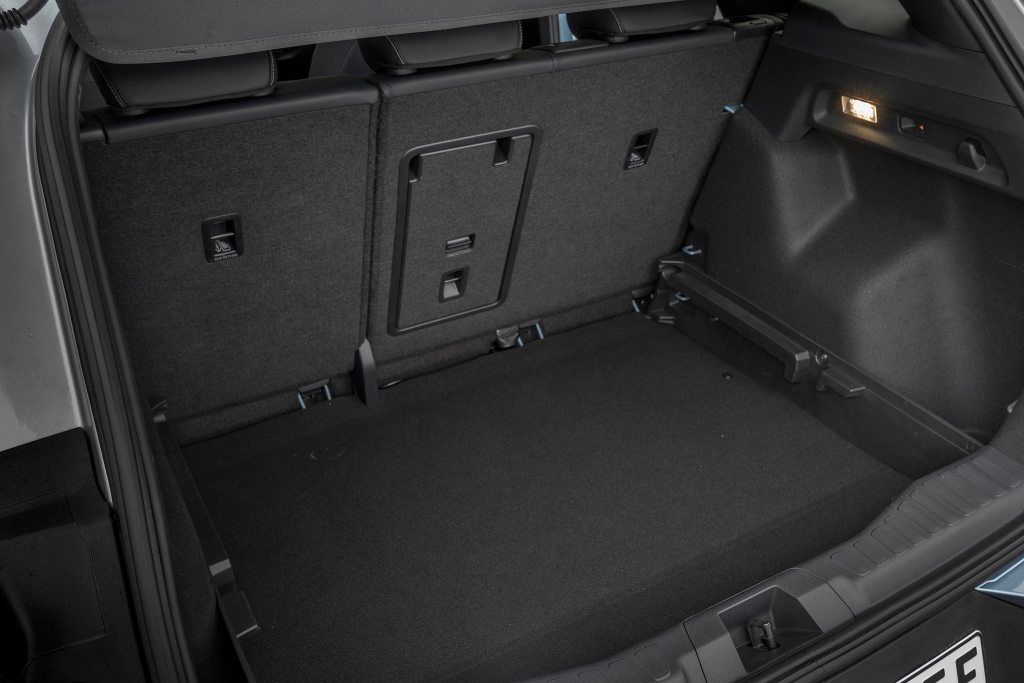
In terms of accommodation, the cabin offers excellent room all-round, especially for the there rear seat passengers.
And the boot also provides a useful 470 litres extending to a relatively level loading bay of 1,460 litres with the split rear seats folded.
A high roof and light coloured fabric adds to the spacious feeling in the cabin while a panorama glass roof is an extra. This is standard on the Explorer Premium AWD.
In terms of running costs, the model can be charged on 11kW AC charging and on 135kW DC fast charging.
This takes 28 minutes to go from 10% to 80% charge. Power consumption is given as 13.9kWh per 100km, and charging locally on a BP charge point indicated a range of 225 miles at 80% charge.
This suggests a total range in the region of 280 miles, when the ambient temperature was 6.5 degrees Celsius.
The review model is listed on the Ford website at £39, 285 with monthly agreements from £264. Deals are on offer, indicating savings of up to £6,798.

Motoring editor for Derry Journal Newspapers