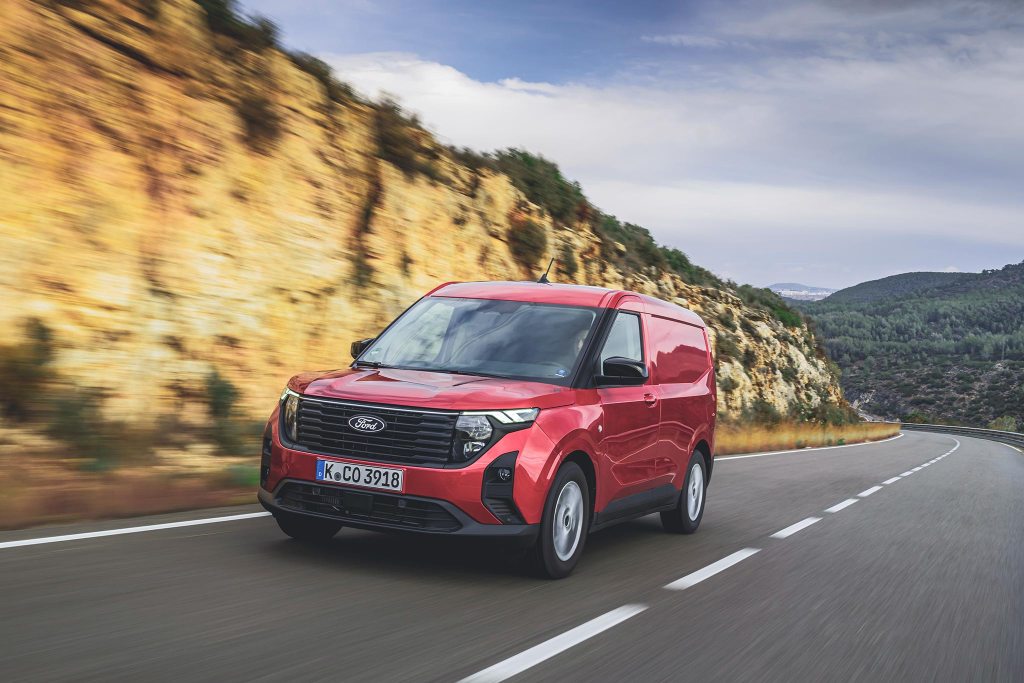
THE Ford Transit Courier is the smallest vehicle in the Transit range. It was first introduced at the Geneva Motor Show in 2013.
Then, it was based on the running platform of the Fiesta hatchback, and the model line has continued to be developed from passenger car underpinnings.
The latest model, launched last year, sees increased load space increased by 25% to 2.91 cu.m and a net payload of 534kg.
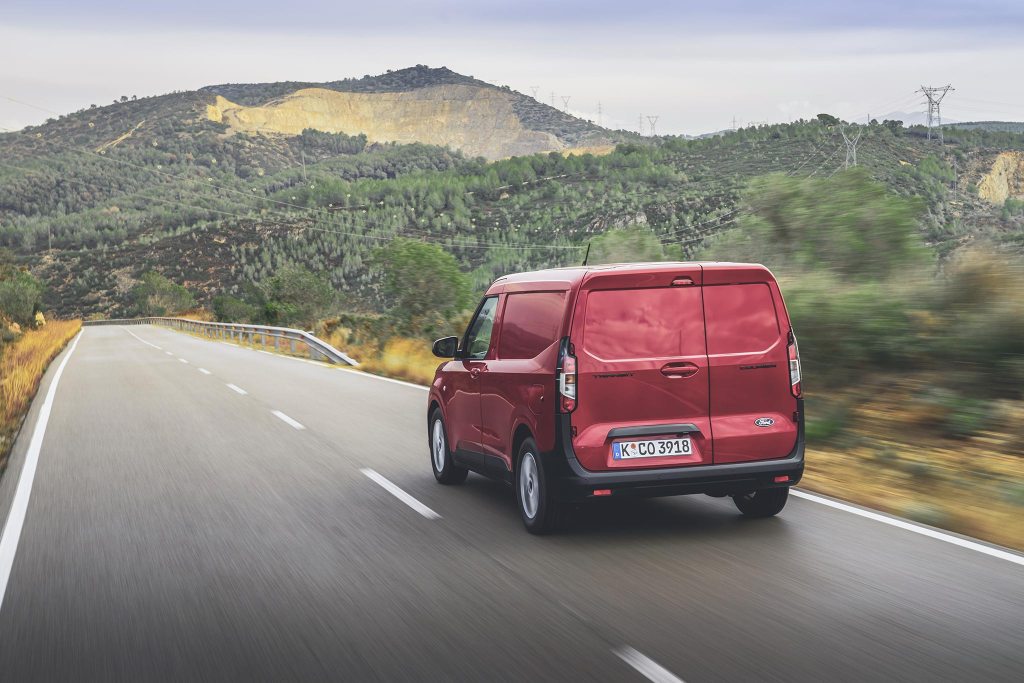
It now accommodates two Euro Pallets at floor level with optional wood side panelling and rubber floor covers to provide extra grip and protection to both the load and body panels.
Floor area extends to 1.8 metres in length and 1.2 metres between wheel arches.
The optional load-through bulkhead provides space for longer items like planks or pipes of up to 2.6 metres.
Factory approved security upgrades include volumetric and perimeter alarms, telematic alerts, anti-pick locks and armour-shell locks.
Moving with the times, but retaining traditional values, the latest version is available in all-electric BEV, petrol or diesel choices.
The all-electric model tops the power chart and is rated at 130PS (100kW) while the lower petrol model and diesel variants both have a similar 100PS output.
In terms of towing ability, the BEV has a maximum weight of 750kg, rising to 1,000 kg for the petrol model and 1,100kg for the diesel.
Review choice is the petrol engined model, its 1.0 litre turbocharged EcoBoost unit in the higher 125PS rating.
While this engine, used in many Ford models, was previously fitted with a fabric ‘wet’ timing belt, the engines are now fitted with a chain drive with hydraulic tensioner.
Drive is to the front wheels through a 6-speed manual gearbox, while a 7-speed automatic is also available on this higher output petrol engine.
In terms of use, the diesel van would be favoured by the building trade with its 250Nm torque and highest towing weight of all the variants.
The petrol model offers greater refinement and will be the retail choice for businesses such as caterers, florists and garden centres.
On road, and there is no doubting the Puma basis for the van.
It’s handling is very saloon based with accurate steering, neat gear changes through the manual gearbox and large deep glass areas for excellent all-round visibility.
Even with a half load on board, performance is not noticeably dulled and brakes are reassuringly sharp on a short pedal which all ads up to a very useable vehicle.
For cold weather morning starts, Ford’s ‘Quickclear’ electric windscreen defroster is standard.
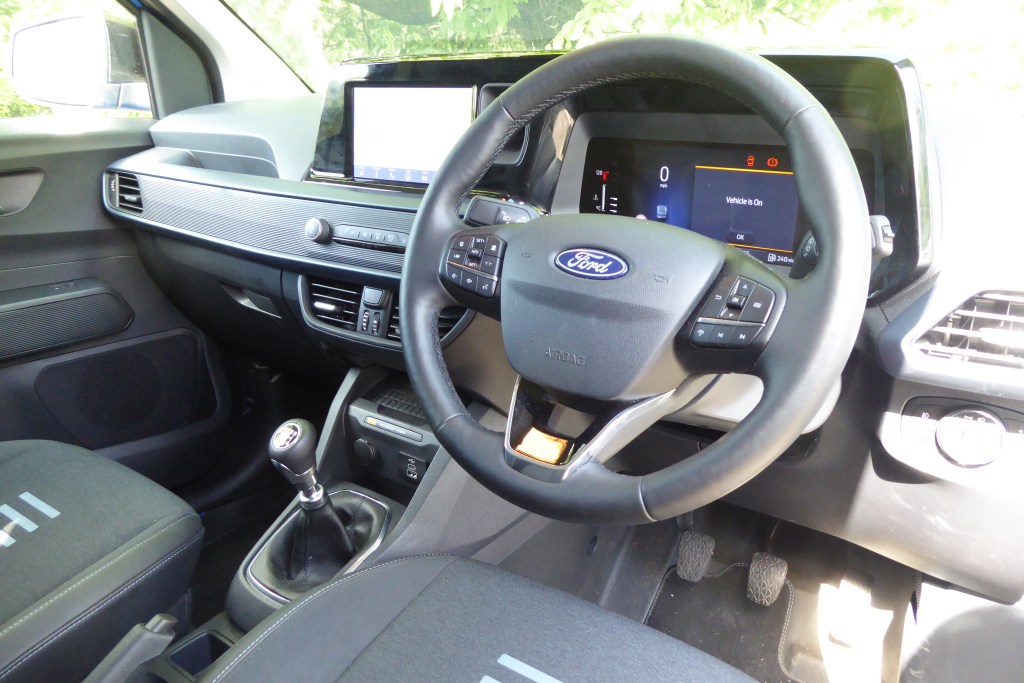
For the driver, the two-seat cabin also raises the game for a commercial vehicle with what Ford refer to as a ‘digiboard’ instrument panel.
This comprises the instrument display and central ten-inch colour touch screen.
As well as the usual infotainment and satnav operation, the central screen also provides the aircon controls. Radio volume is the only manual control. A built-in dashboard phone mounting fin is standard, providing easy access for safe location.
Ford’s latest SYNC 4 connectivity system is standard while subscription-based Connected Navigation can provide updates on traffic, parking and local hazards. Wireless Android Auto and Apple CarPlay compatibility is standard.
The Transit Courier also raises standards within the segment with a Platinum NCAP-award-winning suite of advanced driver assistance systems.
Standard fitment includes Cruise Control, Driver Alert, Intelligent Speed Limiter, Intersection Assist, Lane Keeping System, Rear Parking Aid, Traffic Sign Recognition, Wrong Way Alert.
Available extras include the Driver Assistance Pack fitted to the review model which includes Blind Spot Information System with Lane Change Warning & Aid, Cross Traffic Alert, Digital Rear View Camera, Front Parking Aid, Intelligent Adaptive Cruise Control, Reverse Brake Assist & Clear Exit Assist.
Seats are very supportive for the average frame with the added bonus for long distance travel of vernier backrest adjustment.
There are excellent storage options around the cabin, although there is no key lock on the generous glove box for personal item security.
In terms of running costs, fuel consumption is given as 42.16 mpg, and in a week’s driving, mainly in city traffic, I recorded 37.1mpg. CO2 figure is 153 g/km, with a TC39-VED Band.
While the 125PS Transit Courier in ‘Leader’ trim starts at £22,216 ex VAT, the range topping ‘Active’ specification of the review model starts at £28,980 ex VAT. Warranty is three years / 100,000 miles, with servicing every two years / 25,000 miles.

Motoring editor for Derry Journal Newspapers